Header Image - The Joshua Tree Genome Project

Yearly Archives

2 Articles

New publication: How Joshua trees switch up their photosynthesis game

The following is cross-posted from the Yoder Lab website.
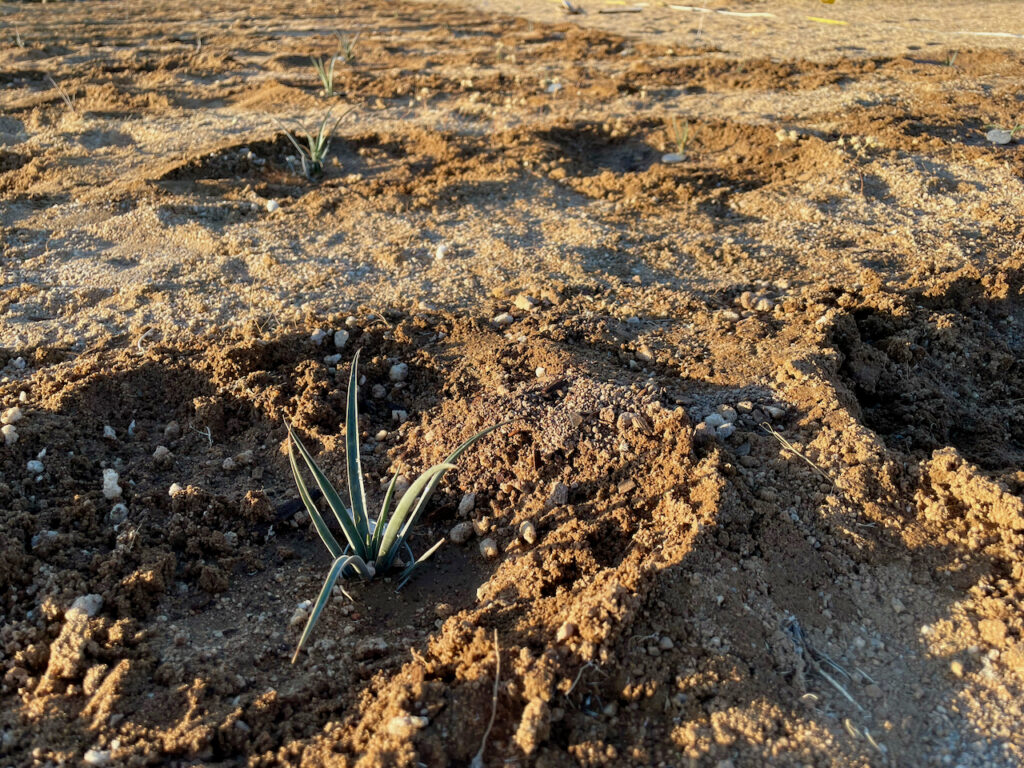
Joshua tree seedlings, tiny green shoots planted in rows in desert soil
Closeup of a Joshua tree seedling planted in one of the JTGP gardens (jby)

Joshua trees can beat the heat of the desert with the help of a special form of photosynthesis, according to data presented in the latest peer-reviewed paper from the Joshua Tree Genome Project collaboration. The study is the first “fruit” of a multi-year experiment in growing Joshua tree seedlings in experimental gardens distributed across the Mojave Desert, led by plant physiologist Karolina Heyduk at the University of Connecticut and USGS ecologist Lesley DeFalco.

Photosynthesis is an everyday miracle: Green plants use the energy in sunlight to convert carbon dioxide into sugars they can use to power their metabolism and build new tissue, assembling themselves from not much more than light and air. But it comes with a conundrum for plants that grow in hot, dry conditions. Plants must open stomata — tiny pores on their leaves — to take in carbon dioxide from the atmosphere. But the same open stomata that let carbon dioxide in can allow water vapor to escape. 

0 views

Help us map and study the activity of Joshua trees’ specialized pollinators, yucca moths!

Yucca moths interacting with Joshua tree flowers. Left, a female Tegeticula antithetica lays eggs in the pistil of an eastern Joshua tree flower before pollinating the flower with the yellow ball of pollen collected under her “chin” (Cole et al. 2017). Right, two yucca moths perch on the pistil of another Joshua tree flower, possibly after mating (Chris Smith).

Joshua Tree Genome Project researchers need your help observing Joshua trees to figure out where their specialized pollinator moths are active. Skip down to the three steps you can follow to help us, or read more background here:

Joshua trees need our help. These icons of the southwestern desert face mounting pressures from climate change, development, and wildfires. Conservation organizations and agencies are working hard to make sure the trees have a future by preserving Joshua tree woodlands and replanting damaged populations. But there are important things we still don’t know that could be important — like how Joshua trees’ specialized pollinators will fare in a climate-changed future.

Yucca moths (Tegeticula antithetica and T. synthetica), exclusively pollinate the eastern and western Joshua trees (Yucca brevifolia and Y. jaegeriana). The moths emerge when the trees are flowering to meet and mate in the flowers. Each female moth then gathers pollen in specialized mouthparts and carries it from one flower to another, where she lay eggs inside the floral pistil and pollinates the flowers by stuffing pollen into receptive tip of the pistil. As pollinated Joshua tree flowers develop into fruit, the moth eggs inside them hatch, and the moth larvae eat some of the seeds developing inside the fruit before tunneling out and burrowing into the sandy soil to form a cocoon.

3 views