
Header Image - The Joshua Tree Genome Project

Monthly Archives

3 Articles

JTGP collaborator Chris Smith profiled on Tucson.com

Tucson.com, the online edition of the Arizona Daily Star, has a big new profile of Joshua Tree Genome Project collaborator, and now lead PI on the collaborative NSF grant supporting the project, Chris Smith. Smith grew up in Tucson and earned his undergrad degree at the University of Arizona, and the article goes in-depth on his longtime love of desert landscapes and the organisms that make a living in them:

Smith’s early work focused on yucca plants in isolated desert mountain ranges known as “sky islands” and the cactus longhorn beetle, a strange flightless bug that feeds on prickly pear and cholla in northern Mexico and the Southwestern U.S.

Then he met renowned evolutionary biologist Nils Olof Pellmyr, who steered him toward the fascinating bond between Joshua trees and the highly specialized yucca moths that live on them.

(“Olle” Pellmyr, who passed away in 2017, also mentored JTGP collaborators Jim Leebens-Mack and Jeremy Yoder.)
0 views

LISTEN: Collaborators Chris Smith and Jeremy Yoder on Nevada Public Radio

Joshua Tree Genome Project collaborators Chris Smith and Jeremy Yoder were on today’s episode of Nevada Public Radio’s “State of Nevada” news show, talking Joshua tree history, natural history, and genomics with host Doug Puppel. You can catch the rebroadcast of the episode tonight at 7pm, or stream the segment on demand on the KNPR website.

0 views

The Joshua Tree Genome Project gets big boost with NSF funding

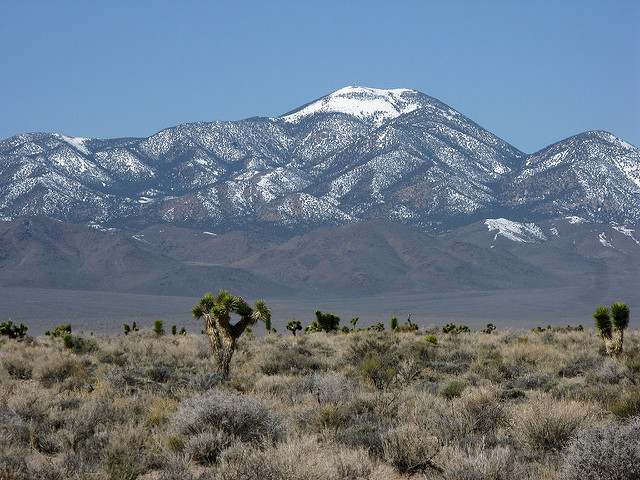
Joshua trees in Tikaboo Valley, Nevada (Jeremy Yoder)

New collaborative grants from the National Science Foundation will support the Joshua Tree Genome Project in studying how one of the most distinctive plants in the Mojave Desert has adapted to the drought and heat of its home range, how extreme desert climates shape the trees’ peculiar relationship with pollen-carrying moths, and how the genetic information within genomes is re-organized over millions of years.

The grants to Willamette University and California State University Northridge, totaling more than $1.5 million, will pay for the assembly of a Joshua tree reference genome and extensive tests of Joshua tree seedlings in experimental gardens. From this, it will be possible to identify genes that help the trees cope with different climate conditions, and pinpoint how different environmental factors have affected their evolution. To conduct the work, the grants will support research experiences for undergraduate students and interns, graduate student thesis projects, and the expansion of a pilot program in which community volunteers across the Mojave learn to map and monitor Joshua tree populations in their own backyards.

0 views